


It can be difficult to pin down the factors driving Donald Trump one month after the American and Israeli programme of strikes on Iran.
However, it remains evident he has an eye on the global crude markets.
A word – or online message – from the US president concerning his strategies once would ignite significant moves in oil prices, as investors reacted to indications the tensions could intensify or conclude.
But in recent days, investors are showing signs of growing more wary about the significance of his remarks.
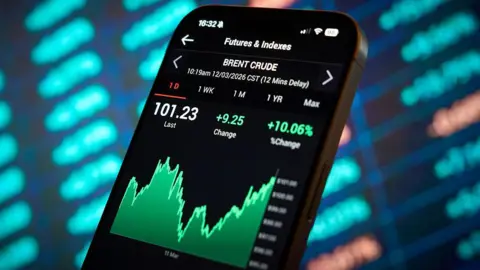
Oil was hovering around around $72 a barrel before 28 February, when the strikes on Iran began.
The week prior, it peaked at $118 a barrel on 19 March and as of Friday afternoon was sitting at slightly under $112 – markedly higher than its pre-war price.
Here are several examples from the past month where Trump and the markets seem to have reacted to one another – with differing effects.
Use the arrow to move to the following chart.
"Oil prices have become a proxy for broader political and financial uncertainties, jumping when Trump's rhetoric becomes confrontational and easing when his rhetoric softens," observes one investment manager.
He adds that markets are appropriately reactive to those messages, considering the big macroeconomic threats that come with rising oil prices.
"Traders are trying to assess genuine risk," he comments. "Markets can seem skittish or bewildered, but what they're actually attempting is managing geopolitical risk in live, with oil acting as the core of that."
However, it can be tough for traders to figure out how to trade, especially since some of Trump's statements seem aimed at moving oil prices, as opposed to communicating policy, says another investment advisor.
"As they say, the first casualty of war is clarity," he says. "It is likely much of the communication back-and-forth around productive talks, and the contrary, very much are focused on merely shifting the market price of oil."
Investor Response Become Increasingly Subdued
On Thursday, minutes after US stock markets experienced their sharpest fall since the beginning of the conflict with Iran, Trump stated negotiations with Iran were going "extremely well" and he was delaying military strikes on Iran's oil facilities until at least 6 April.
However, the oil price proceeded to climb.
One currency strategist explains that market reactions are "showing less volatility" because of the "wide divergence" between Trump's reassurances and the lack of response from Tehran.
"Given the current situation, many investors can not see an imminent resolution to the hostilities and markets continue to be apprehensive."
Another investment director says investors have also grown used to Trump "often shifting position at indications of geopolitical, stock market or market turmoil".
"There is a amount of wariness, or even frank suspicion, creeping in at the edges," he says.


